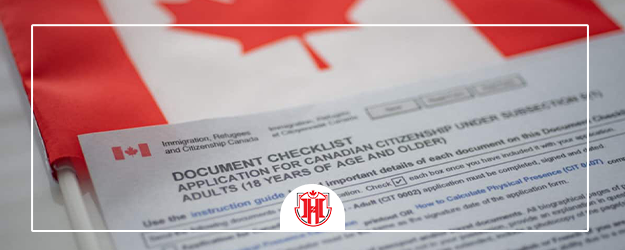
The Canada Express Entry program is an advanced immigration system designed to attract skilled workers from around the world by accelerating their pathway to permanent residence. Launched in 2015, this system manages applications for three main federal economic immigration programs.
Through a points-based system known as the Comprehensive Ranking System (CRS), applicants are evaluated based on various criteria, including age, education, work experience, and proficiency in English or French. Candidates with the highest scores in the Express Entry pool receive Invitations to Apply (ITA) for permanent residence.
This innovative approach enables Canada to respond quickly to labor market needs while selecting individuals with the qualifications and skills necessary to contribute to the country’s economy.
However, not everyone qualifies for Express Entry. What are the requirements? What documents are needed? And how does one apply? In this article, Hermes Immigration Company answers these questions based on the most recent guidelines published by Immigration, Refugees and Citizenship Canada (IRCC).
Overview of Immigration to Canada Through Express Entry

The Express Entry system is one of the primary pathways to obtain Canadian permanent residence. To qualify, applicants must meet the criteria of one of the following three federal programs:
1. Canadian Experience Class (CEC)
The Canadian Experience Class is intended for individuals who have at least one year of skilled work experience in Canada and wish to obtain permanent residence. This program primarily targets temporary foreign workers and international graduates who have already gained experience in the Canadian labor market.
2. Federal Skilled Worker Program (FSWP)
The Federal Skilled Worker Program is designed for skilled professionals outside Canada whose qualifications are in demand. Candidates are assessed based on factors such as age, education, work experience, and language proficiency.
3. Federal Skilled Trades Program (FSTP)
The Federal Skilled Trades Program is tailored for skilled tradespersons with work experience in eligible occupations. Candidates must demonstrate relevant work experience and, in many cases, provide a valid job offer or certification in their trade.
If an individual meets the eligibility criteria under one of these programs, they may enter the CRS ranking system and compete for permanent residence. Additionally, applicants who qualify for a Provincial Nominee Program may apply through a specific province, which can significantly accelerate processing.
Required Documents for Express Entry
To obtain permanent residence through Express Entry, applicants must provide documentation that verifies their eligibility and confirms the accuracy of the information submitted.
These documents form a comprehensive profile of the applicant’s qualifications and background.
Core Documents
- Valid passport (recommended validity of at least six months)
- Approved language test results (IELTS or CELPIP for English; TEF or TCF for French)
- Travel history (copies of visas and entry/exit stamps from the past ten years, if applicable)
- Educational credentials and transcripts
- Educational Credential Assessment (ECA) from a designated organization confirming equivalency to Canadian standards
- Provincial nomination certificate (if applicable)
- Valid job offer from a Canadian employer (if applicable)
- Biometrics and digital photo
- Trade certification (if required for your occupation)
- Proof of funds (detailed financial statements for the past six months)
Additional Supporting Documents
While not required for every applicant, the following may be necessary depending on personal circumstances:
- Police clearance certificate
- Birth certificates for dependent children
- Marriage certificate (if married)
- Divorce certificate (if applicable)
- Adoption documents (if applicable)
After initial submission, IRCC may request additional documents, such as proof of relationship to relatives in Canada or updated identification materials.
Steps to Apply for Express Entry
According to IRCC, eligible applicants must create an online profile before entering the Express Entry pool.
Step 1: Calculate Your Score
Applicants must determine their CRS score before submitting a profile. If married, one spouse must be designated as the principal applicant, ideally the one with the higher CRS score. Canada’s official online CRS calculator can be used for this purpose.
Step 2: Create an Online Account
Once eligibility is confirmed, applicants must create an online account and submit personal details, language test results, education credentials, and other required information.
Step 3: Submit the Profile
After completing the profile, it is submitted online. The system identifies the most appropriate program based on the information provided. Qualified candidates enter the Express Entry pool and await selection.
How CRS Scores Are Calculated
The Comprehensive Ranking System evaluates candidates based on the following categories:
| Factor | Maximum Points |
|---|---|
| Core human capital factors (age, education, language, work experience) | 460–500 |
| Spouse factors | 40 |
| Provincial nomination or job offer | 600 |
| Additional factors | 100 |
CRS Points by Age
- 18–35 years: 12
- 36 years: 11
- 37 years: 10
- 38 years: 9
- 39 years: 8
- 40 years: 7
- 41 years: 6
- 42 years: 5
- 43 years: 4
- 44 years: 3
- 45 years: 2
- 46 years: 1
- 47+ years: 0
CRS Points by Education
- Diploma: 4
- Bachelor’s degree: 21
- Master’s degree: 23
- Doctorate: 25
- Two or more post-secondary credentials: 22
CRS Points by Work Experience
- Minimum one year: 9
- 2–3 years: 11
- 4–5 years: 13
- 6+ years: 15
CRS Points by Language Level
- CLB 7: 12
- CLB 8: 20
- CLB 9 or higher: 24
The Canadian Language Benchmarks (CLB) measure language proficiency in Canada.
Receiving an Invitation to Apply (ITA)
Unlike temporary visas, Express Entry is competitive. All eligible profiles enter a pool, and IRCC selects candidates based on CRS scores and labor market needs.
If no invitation is received within one year, applicants must create a new profile.
Once an ITA is issued, candidates have 60 days to submit a complete permanent residence application.
Confirmation of Permanent Residence (COPR)
After approval, applicants receive a Confirmation of Permanent Residence (COPR). This document confirms eligibility to receive a permanent resident visa.
The information on the COPR must match passport details exactly. Any discrepancies must be corrected through the applicant’s online profile.
Final Thoughts
The Canada Express Entry program offers a structured and efficient pathway to permanent residence for skilled workers worldwide. By using a comprehensive points-based system, Canada ensures that selected candidates have the qualifications needed to contribute meaningfully to its economy and society.
Express Entry provides a clear and merit-based route for individuals seeking long-term opportunities in Canada. However, eligibility ultimately depends on individual qualifications and preparedness. For those who meet the criteria, it remains one of the fastest and most secure pathways to Canadian permanent residence.