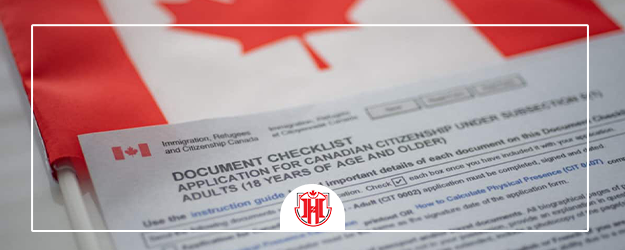
The Canadian Experience Class (CEC) is a key immigration pathway within Canada’s Express Entry system. It is specifically designed for skilled workers who have gained work experience in Canada and wish to become permanent residents.
To qualify for this program, applicants must have at least one year of skilled work experience in Canada and meet the required language proficiency standards. Due to its streamlined process, the CEC is highly popular and is considered one of the faster routes to permanent residence compared to other immigration pathways.
Eligible candidates can leverage their Canadian work experience to increase their Comprehensive Ranking System (CRS) score and improve their chances of receiving an Invitation to Apply (ITA) for permanent residence.
What Is the Canadian Experience Class (CEC)?
The Canadian Experience Class is a major component of Canada’s Express Entry system. It is designed for skilled workers who have already gained significant work experience in Canada.
The program is intended for individuals who have previously worked in Canada. Eligibility requirements include:
- At least one year of full-time (or equivalent part-time) skilled work experience in Canada within the last three years before applying
- Meeting minimum English or French language requirements
CEC is particularly beneficial for temporary foreign workers and international graduates who have worked in Canada, as it allows them to use their Canadian work experience to increase their CRS score and improve their chances of receiving an ITA for permanent residence.
Who Is This Program Suitable For?
The Canadian Experience Class is suitable for the following individuals:
Temporary Foreign Workers
Individuals who have obtained skilled work experience in Canada while holding a valid work permit. They must have at least one year of full-time (or equivalent part-time) skilled work experience in Canada within the three years prior to applying.
International Graduates
Graduates of Canadian post-secondary institutions who have gained skilled work experience in Canada under a Post-Graduation Work Permit (PGWP). They must have completed their studies at an eligible Canadian institution and acquired at least one year of full-time (or equivalent part-time) skilled work experience within the three years before applying.
Open Work Permit Holders
Individuals who entered Canada as accompanying spouses or partners with an open work permit and have obtained at least one year of full-time work experience in Canada.
Eligibility Requirements for the Canadian Experience Class
Work Experience
Applicants must have at least one year of skilled work experience in Canada within the three years preceding their application. This experience must be full-time (or equivalent part-time), obtained legally under proper work authorization, and fall under eligible occupational categories:
- NOC Skill Type 0: Management occupations
- Skill Level A: Professional occupations
- Skill Level B: Technical and skilled trades occupations
Language Requirements
Applicants must demonstrate proficiency in English or French by taking an approved language test.
Minimum requirements:
- CLB 7 for NOC 0 or A occupations
- CLB 5 for NOC B occupations
Test results must be less than two years old at the time of application.
Approved language tests include:
- IELTS (International English Language Testing System)
- CELPIP (Canadian English Language Proficiency Index Program)
- TEF (Test d’évaluation de français)
- TCF (Test de connaissance du français)
Education
There is no mandatory education requirement for CEC. However, having a Canadian educational credential or a foreign credential assessed through an Educational Credential Assessment (ECA) can increase an applicant’s CRS score and improve their chances of receiving an ITA.
Additional Requirements
Applicants must:
- Intend to live outside the province of Quebec
- Meet medical examination requirements
- Provide police clearance certificates
- Have no serious criminal record
What Is a Bridging Open Work Permit (BOWP)?
A Bridging Open Work Permit allows applicants who have applied for permanent residence to continue working legally in Canada while their application is being processed.
These permits are issued to individuals who already hold a valid work permit and are awaiting a final decision on their permanent residence application. BOWPs allow applicants to work for any employer without being restricted to a specific job or employer.
Applicants must have submitted a permanent residence application under an eligible economic immigration program such as:
- Canadian Experience Class (CEC)
- Federal Skilled Worker Program (FSW)
- Provincial Nominee Program (PNP)
Required Documents for CEC
Applicants must prepare the following documents:
- Valid passport or travel documents
- Employment reference letters detailing job title, duties, dates, and working hours
- Pay stubs or employment contracts
- T4 or T4A tax forms
- Official language test results
- Proof of financial ability to support themselves and family (if required)
- Educational documents or ECA (if applicable)
- Copies of work permits
- Police clearance certificates
- Completed application forms and fee payment receipts
- Medical examination results from an IRCC-approved physician
- Express Entry profile confirmation and supporting documents
Step-by-Step Application Process
- Determine Eligibility
- Create an Express Entry Profile
- Gather Required Documents
- Submit Express Entry Profile
- Receive an Invitation to Apply (ITA)
- Submit Complete PR Application within 60 days
- Wait for Processing
- Receive Confirmation of Permanent Residence (COPR)
- Land in Canada and activate permanent resident status
Receiving an ITA Under CEC
IRCC conducts periodic draws from the Express Entry pool. Candidates with CRS scores equal to or higher than the cut-off score receive an ITA.
If multiple candidates have the same score, the tie-breaking rule prioritizes those who created their profile earlier.
To increase the chances of receiving an ITA, candidates should aim to maximize their CRS score and submit their profile as early as possible.
Estimated Costs (2024)
- Language test: CAD 300–340
- Educational Credential Assessment: CAD 200–240
- Biometrics: CAD 85
- Processing fee (principal applicant): CAD 850
- Right of Permanent Residence Fee: CAD 515
- Child applicant: CAD 230
- Spouse/Partner processing fee: CAD 850
Additional costs may apply.
Advantages of CEC
- Faster processing compared to many other immigration programs
- No job offer required
- No proof of funds required if currently working in Canada or holding a valid job offer
- Ideal pathway for international graduates
- High CRS value for Canadian work experience
- Access to broader employment opportunities and social benefits as a permanent resident
Challenges of CEC
- Highly competitive due to high demand
- Work experience must be obtained within the last three years
- Language score requirements can be challenging
- Minimum one year of full-time skilled experience requirement
- Not applicable for those intending to settle in Quebec
- Document preparation can be complex and time-consuming
Conclusion
The Canadian Experience Class is one of the most efficient immigration pathways for individuals who have gained work experience in Canada and wish to settle permanently.
By understanding the eligibility criteria, requirements, and application process, and by planning carefully, applicants can significantly increase their chances of success in obtaining permanent residence in Canada.