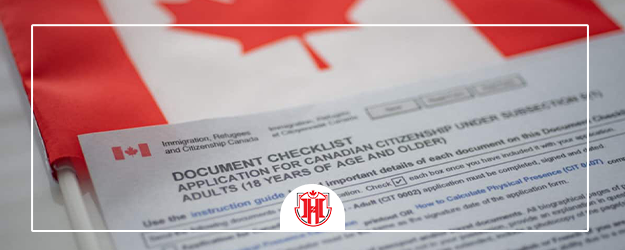
Canada attracts talent and professionals from around the world through comprehensive and inclusive immigration programs. One of the most important of these programs is the Federal Skilled Worker Program (FSWP), a key component of the Express Entry system.
The Skilled Worker Program provides a unique pathway for individuals with sufficient skills, professional experience, and qualifications to obtain Canadian permanent residence and eventually become citizens. Factors such as work experience, field of expertise, English or French language proficiency, education level, and age are assessed under this program.
In this article, Hermes Immigration reviews the importance of the Skilled Worker Program, its requirements, application process, and key documentation based on the official guidelines published by Immigration, Refugees and Citizenship Canada (IRCC).
What Is the Canada Skilled Worker Program?
The Skilled Worker Program is an immigration pathway that allows individuals with academic backgrounds and professional expertise to immigrate to Canada. Applicants from around the world are evaluated based on criteria such as education, work experience, and language proficiency.
The main objective of this program is to attract qualified professionals with academic backgrounds who can contribute to various industrial and economic sectors in Canada. Applicants must provide documented proof of their qualifications, skills, and experience. Mere claims are not sufficient.
A Skilled Worker is typically someone who has studied and worked in a specialized field for several years and possesses significant professional expertise.
Language proficiency in English or French is also mandatory. Accepted English language tests include IELTS, TOEFL, and CELPIP, while French proficiency can be demonstrated through TEF or TCF examinations. Official documentation must always be provided.
Why Is the Skilled Worker Visa So Popular?
Among Canada’s various immigration pathways, the Skilled Worker program remains one of the most popular. Several factors contribute to its appeal:
1. Permanent Residence
Successful applicants receive permanent residence (PR), allowing them to live and work in any province or territory in Canada and access a wide range of social benefits.
2. Faster Processing
Compared to certain other immigration programs, the Skilled Worker pathway often has processing times ranging from 6 to 10 months.
3. Family Inclusion
Spouses and dependent children can apply simultaneously with the principal applicant, simplifying the relocation process.
4. Access to Healthcare and Education
Family members gain access to Canada’s public healthcare system and free public education from the moment they settle in Canada.
Key Requirements for the Skilled Worker Visa
Despite its popularity, not everyone qualifies. Applicants must meet specific eligibility criteria:
Academic Education
A recognized academic degree significantly increases the applicant’s score. Bachelor’s, Master’s, and PhD degrees receive higher points, while high school diplomas receive fewer.
Language Proficiency
Applicants must provide valid language test results in English or French. Approved tests include IELTS, TOEFL, CELPIP (English) and TEF or TCF (French).
Work Experience
Work experience is one of the most important scoring factors. Occupations are classified under Canada’s Training, Education, Experience and Responsibilities (TEER) system, which categorizes jobs based on required training, education, experience, and responsibilities.
Applicants working in higher-skilled occupations typically receive more points.
Proof of Funds
Applicants must demonstrate sufficient financial resources to support themselves and their family members upon arrival. The required amount depends on family size and is updated annually by IRCC. For reference, the base amount in 2024 was approximately CAD 13,000 for a single applicant, with additional funds required per accompanying family member.
TEER Occupational Categories
The TEER system classifies occupations into the following categories:
- TEER 0 – Management occupations (e.g., advertising managers, financial managers)
- TEER 1 – Occupations requiring a university degree (e.g., financial advisors, software engineers)
- TEER 2 – Occupations requiring a college diploma or apprenticeship training (e.g., web technicians, laboratory technicians)
- TEER 3 – Occupations requiring less than two years of training (e.g., dental assistants, bakers)
- TEER 4 – Occupations requiring high school education and short-term training (e.g., retail salespersons, childcare providers)
- TEER 5 – Occupations requiring minimal formal education (e.g., delivery drivers, gardeners)
Pathways Under Skilled Worker
There are generally two main routes:
- Express Entry (Federal Program)
- Provincial Nominee Programs (PNPs)
The Express Entry system is the most widely recognized and allows candidates worldwide to create profiles and compete based on their Comprehensive Ranking System (CRS) score.
Provincial programs require applicants to apply directly to a specific province that matches their skills with regional labor market needs.
Minimum Score Requirement (67 Points)
To qualify under the Federal Skilled Worker Program, applicants must score at least 67 points out of 100 in the eligibility grid. The evaluation factors include:
- Age
- Education
- Work experience
- Language skills
- Adaptability
- Job offer
Age Points
Maximum 12 points (ages 18–35 receive full points). Points decrease gradually after age 35, reaching zero at age 47 and above.
Education Points
- Bachelor’s degree: 21 points
- Two or more post-secondary credentials: 22 points
- Master’s degree: 23 points
- PhD: 25 points
Work Experience Points
- 1 year: 9 points
- 2–3 years: 11 points
- 4–5 years: 13 points
- 6+ years: 15 points
Language Points
- IELTS 7: 4 points per ability
- IELTS 8: 5 points per ability
- IELTS 9: 6 points per ability
Additional points may be awarded for French proficiency.
Adaptability (Maximum 10 Points)
Points may be awarded for factors such as:
- Previous study or work in Canada
- Spouse’s language ability
- Canadian relatives
- Spouse’s Canadian work or study experience
Job Offer
A valid full-time job offer for at least one year may provide up to 10 additional points.
Application Process
Step 1: Create an Online Profile
Applicants must create an online profile and enter detailed personal, educational, and professional information. The system assigns a CRS score (0–1200). Profiles remain valid for one year.
Step 2: Receive an Invitation to Apply (ITA)
Candidates with the highest scores receive an Invitation to Apply during regular draws. If scores are tied, priority is given to earlier submissions.
Step 3: Submit Documents and Biometrics
After receiving an ITA, applicants must upload supporting documents, pay processing fees, undergo medical examinations, provide police certificates, and complete biometrics.
Step 4: Receive Visa and COPR
Upon approval, applicants receive a Confirmation of Permanent Residence (COPR). They must present their passport for visa issuance and enter Canada before the visa expiration date.
At the port of entry, applicants must present both their visa and COPR document to Canadian border officers.
Final Thoughts
The Canada Skilled Worker Visa is more than just an immigration pathway; it is a strategic initiative designed to strengthen Canada’s economy by attracting qualified professionals.
By evaluating candidates based on education, work experience, language skills, and adaptability, Canada ensures that new permanent residents can integrate successfully into society and the labor market.
For qualified professionals seeking long-term stability and opportunity, the Federal Skilled Worker Program remains one of the most reliable and structured routes to Canadian permanent residence.